



The UK construction industry stands at a pivotal moment. Productivity has lagged behind other sectors for decades, while demand for high-quality and sustainable-centric buildings continues to rise.
The UK has long recognised the need for reform. Reports such as the Constructing the Team (Latham), Rethinking Construction (Egan) and The Farmer Review of the UK Construction Labour Model all called for collaboration and a shift toward manufacturing-led approaches.
At the same time, fragmentation in the construction industry persists. Despite the growth of design-and-build and collaborative contracts, supply chains remain disjointed, margins thin and investment in R&D comparatively low.
These pressures expose a fundamental tension – while the potential for offsite and product-based solutions to transform delivery is significant, delivering improved quality, safety and programme certainty through existing procurement models often inhibit rather than enable innovation. Public sector frameworks frequently require bidders to respond to pre-designed, “spec-compliant” solutions rooted in traditional construction thinking. This reinforces the status quo and limits scope for product innovation.
If the industry is to move forward, smarter procurement must underpin smarter construction.
Offsite’s unrealised potential
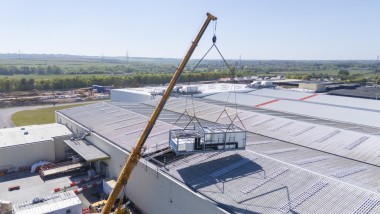
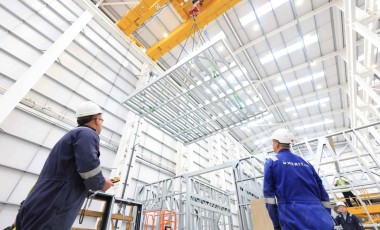
Offsite construction offers a route to address many of these systemic challenges.
Manufacturing-led approaches enable:
- Greater programme certainty through controlled factory environments
- Higher-quality and reduced defects
- Enhanced sustainability through material efficiency and waste reduction
- Improved health and safety performance
- Stronger cost predictability through repeatable product platforms
Offsite methodologies are fundamentally different from traditional, project-by-project delivery. They rely on early design freeze, platform thinking, digital integration and volume continuity. Selling this radically different proposition can be challenging, particularly where consultants and clients default to established processes out of habit.
But in reality, procurement is not inherently restrictive – it is multifaceted. Procurement is capable of enabling collaboration.
Cultural barriers, not technological ones
Digital tools such as BIM, automation and design for manufacture and assembly (DfMA) are readily available. They offer significant opportunities to improve quality and productivity. The Building Safety Act is accelerating this shift by formalising accountability and demanding deeper product knowledge and earlier collaboration.
Yet technology alone will not transform the sector. The deeper challenge is cultural. A risk-averse mindset and a focus on lowest capital cost rather than whole-life value continue to undermine innovation. MMC tools remain underused not because they are immature, but because procurement and delivery cultures have yet to fully align with their potential.
To unlock progress, the industry must stop treating digital transformation as an add-on and start embracing it as foundational infrastructure.
Smarter procurement can achieve this in several ways:
1. Outcome-based procurement
Moving from prescriptive specifications to performance- and outcome-based requirements allows contractors to propose innovative, product-based solutions rather than replicate legacy designs.
2. Early contractor involvement
Embedding manufacturers and offsite specialists at concept stage ensures design optimisation and earlier risk resolution.
3. Innovation quotas in public spending
Public bodies could progressively allocate a defined proportion of projects to innovative or product-led construction methods, stimulating demand continuity and enabling investment in automation and R&D.
5. Demonstrable ROI through pilots
Showcasing successful pilot projects with transparent performance metrics can alleviate financial concerns and provide evidence-based justification for change.
Conclusion: enabling the shift
The UK construction sector does not lack ideas. It lacks systemic alignment between ambition and procurement reality.
Offsite construction methodologies are capable of delivering safer, more sustainable and more efficient built environments. But their full potential will only be realised if procurement evolves to support product-based thinking and digital integration.
Smarter procurement is not an administrative adjustment; it is a strategic lever for transformation. By breaking down structural barriers and fostering a cultural shift toward shared responsibility and innovation, the industry can unlock meaningful productivity gains and deliver better-built environments for society.